
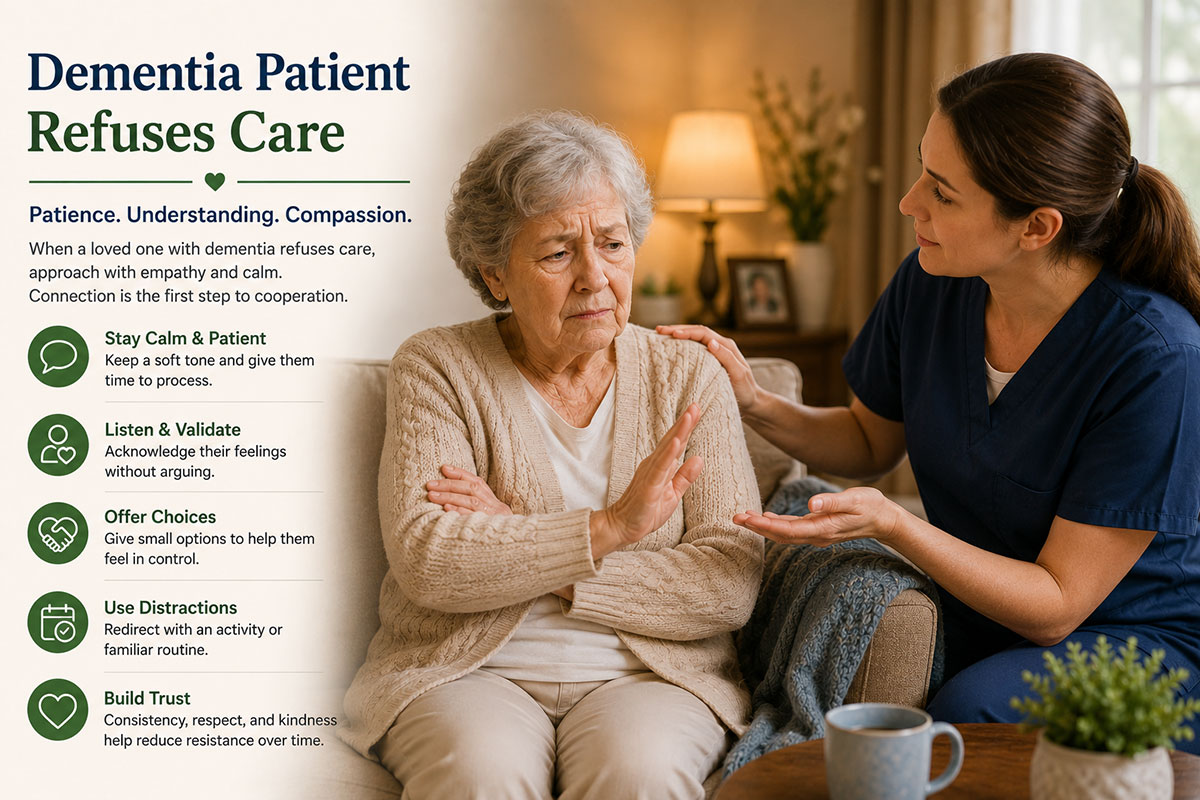
If your loved one with dementia refuses help bathing, resists taking medication, or insists nothing is wrong even as their needs become obvious, you are far from alone — and it doesn’t mean you’re doing anything wrong. Refusal of care is one of the most common, and most exhausting, challenges family caregivers face, and it often marks the point where caregiving starts to feel unsustainable.
This guide offers practical strategies for understanding and responding to care refusal, and honest guidance on recognising when it’s time to bring in professional support.
Why Dementia Patients Refuse Care
Refusal is rarely stubbornness in the way we usually think about it — it’s often the dementia itself driving the behaviour. A loved one may not recognise that they need help, since insight into one’s own cognitive decline is frequently impaired by the condition. Fear and loss of control play a huge role too — being asked to accept help with bathing or dressing can feel deeply threatening to someone’s sense of independence and dignity, triggering resistance as a protective response.
Communication breakdown is another common driver — a request that seems simple to a caregiver may be confusing or overwhelming to process for someone with dementia, and what looks like defiance is sometimes simply an inability to understand or respond to what’s being asked.
Practical Strategies That Can Help
Approaching from a place of connection rather than correction tends to work far better than logic or argument — validating feelings (‘I can see this is frustrating’) rather than trying to convince someone their perception is wrong. Offering choices within a task, rather than a single yes-or-no request, can restore a sense of control — ‘would you like to wear the blue shirt or the green one’ rather than ‘it’s time to get dressed’.
Timing and approach matter enormously too — trying a difficult task when a loved one is tired, hungry, or overstimulated tends to increase resistance, while a calm, unhurried approach at a good moment in their day often meets with far less pushback. It also helps to pick battles carefully — not every refusal needs to be won immediately, and sometimes stepping away and returning to a task later, once the moment of resistance has passed, works better than pushing through it.
When Refusal Signals It’s Time for More Support
Some patterns are worth paying close attention to as signals that home caregiving alone may no longer be sustainable or safe: consistent refusal of essential care like medication or bathing that’s leading to real health risk, safety incidents like wandering or falls that are becoming more frequent, or caregiver exhaustion reaching a point where the caregiver’s own health and wellbeing are suffering.
It’s worth being honest with yourself here — persistent care refusal is genuinely one of the hardest challenges in dementia caregiving, and needing professional support isn’t a sign of failure. Trained memory care staff bring both specific behavioural techniques and, just as importantly, a level of emotional distance that can make certain interactions less charged than they are between a parent and adult child.