
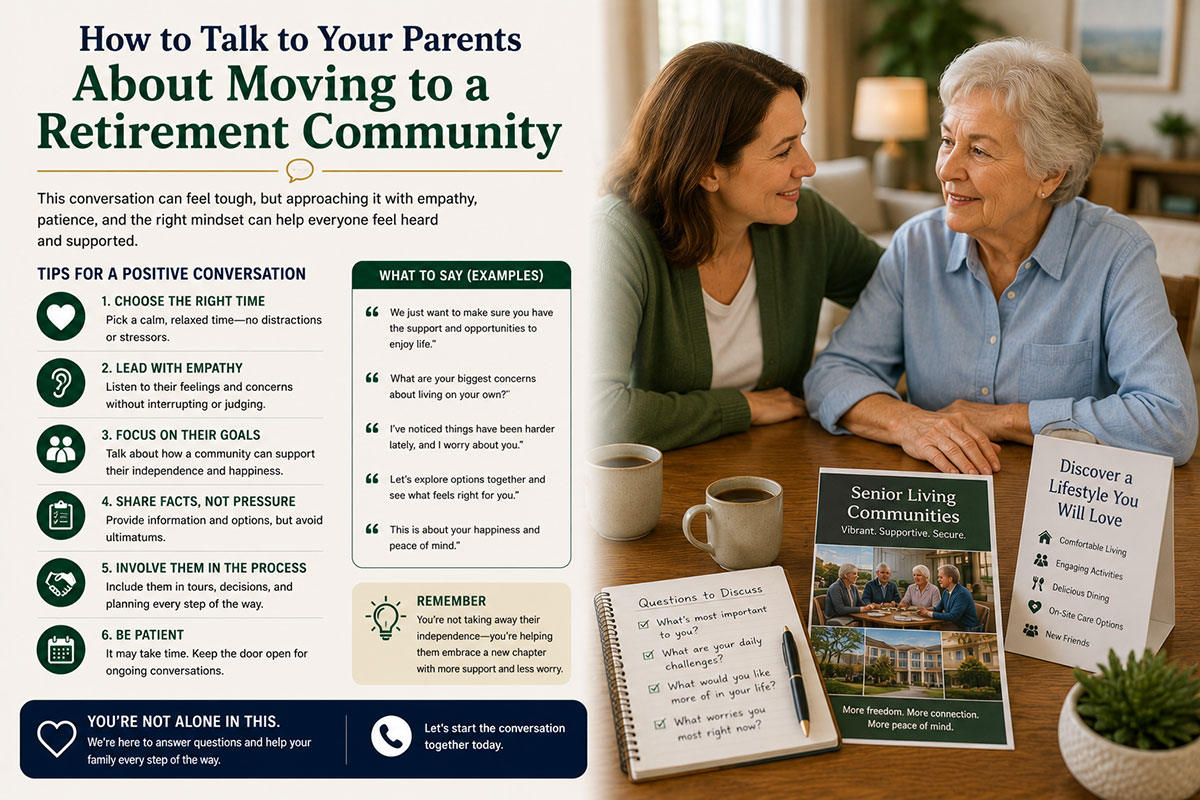
Why This Is One of the Hardest Conversations You Will Ever Have
This conversation is hard not because you are doing something wrong. It is hard because you are doing something genuinely difficult — navigating the intersection of love, safety, autonomy, and loss in real time. There is no script that guarantees a perfect outcome. But there are approaches that are more likely to preserve relationship, build trust, and move slowly towards a decision that serves your parent’s actual wellbeing.
Timing: When to Have the Talk (and When Not To)
Start Earlier Than You Think You Need To
The worst time to have this conversation is under the pressure of a crisis — immediately after a fall, a hospitalisation, or a frightening incident. The best time is proactively — when your parent is relatively well, when there is no immediate crisis, and when both of you have the emotional space to have a genuine conversation.
Choose a Calm, Private Moment
Avoid raising this topic during family gatherings, holidays, or in the presence of siblings who have not been part of the discussion. The conversation deserves privacy and calm.
One Conversation Is Never Enough
This is not a single conversation. It is a series of conversations over weeks or months. The first conversation plants a seed. Expecting a single discussion to produce a decision is unrealistic.
Opening the Conversation: Script Templates That Work
Lead with Observation, Not Judgement
Instead of: ‘I think you need to move to assisted living.’
Try: ‘I’ve been thinking about you a lot lately. When I visited last month, I noticed [specific observation] and I’ve been worried. Can we talk about it?’
The difference is significant. The first approach puts your parent immediately on the defensive, because it sounds like a verdict. The second invites a conversation, because it expresses concern without a predetermined conclusion.
Use ‘I’ Statements, Not ‘You’ Statements
‘I worry about you being alone at night’ lands differently than ‘You shouldn’t be alone.’ ‘I feel scared when I can’t reach you’ is different from ‘You need to be somewhere with people around.’ ‘I’ statements express your genuine feelings; ‘you’ statements feel like accusations or commands.
Handling Common Objections
‘I’m Fine’ — The Most Common Response
What it usually means: ‘I hear you proposing a change and I am not ready for that.’ Response approach: ‘I’m glad you feel fine. Can I share the specific things I’ve noticed? Not to argue — I just want to understand what you’re experiencing and what I’m missing.’ Then listen. Really listen, without immediately countering.
‘I Don’t Want to Leave My Home’
Home is not just a building. For an older adult who has lived somewhere for decades, home is identity, memory, independence, and relationship with neighbourhood and community. Response approach: Acknowledge this fully before offering alternatives. ‘I understand this house means so much to you — you’ve built so many memories here.’ Then, gently: ‘I wonder if we could explore what you’d most miss, and whether any of that might be possible in a different setting.’
‘I Don’t Want to Be a Burden’
Response approach: ‘You are not a burden to me. But I think I’d worry less, not more, if I knew you were somewhere with people looking out for you around the clock. The burden is the worry, not the care.’
Involving Siblings and Other Family Members
Attempt a family conversation before approaching your parent together, so that siblings present a united perspective rather than debating in front of your parent. If family agreement is impossible, a professional geriatric care manager can provide an objective assessment that is harder to dismiss than any family member’s opinion.