
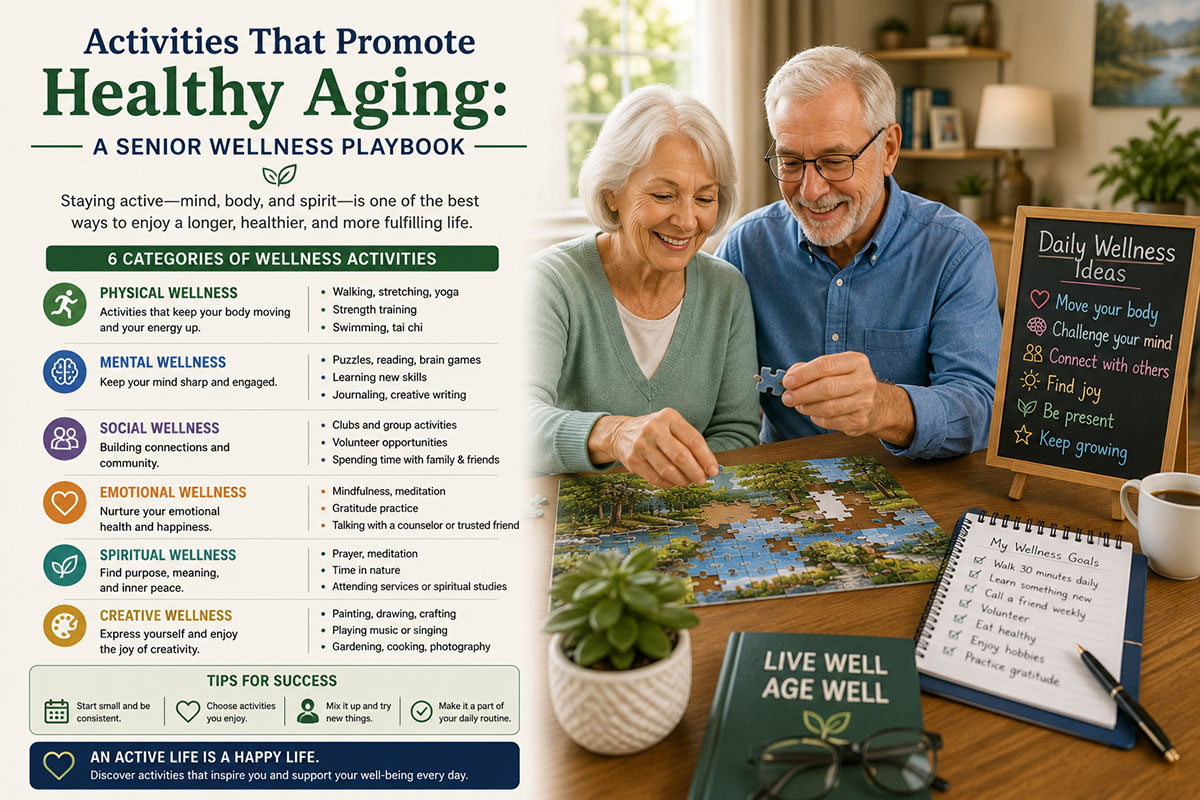
The 4 Pillars of Healthy Aging
Aging well is not simply the absence of disease. It is the presence of vitality — physical capability, mental sharpness, meaningful social connection, and a sense of purpose. Decades of research converge on a consistent set of findings: the way we age is shaped far more by our daily choices and habits than by our genetic inheritance.
Pillar 1: Physical Wellness — Movement as Medicine
The evidence that regular physical activity is the single most powerful intervention available for healthy aging is overwhelming. Exercise improves cardiovascular health, maintains muscle mass and strength, reduces fall risk, supports cognitive function, improves sleep, reduces depression and anxiety, and is associated with significantly lower all-cause mortality in older adults.
The American College of Sports Medicine recommends that older adults aim for 150 minutes per week of moderate-intensity aerobic activity, plus muscle-strengthening activities on two or more days per week.
Best Low-Impact Exercises for Seniors
- Walking: A brisk 30-minute walk five days per week meets the aerobic activity recommendation and requires no equipment, no gym membership, and no special skill.
- Swimming and water aerobics: Ideal for seniors with arthritis, joint pain, or osteoporosis — the buoyancy of water reduces joint impact while providing cardiovascular and resistance training benefits.
- Tai Chi: Shown in multiple clinical studies to significantly reduce fall risk in older adults — the combination of balance training, controlled movement, and focused attention produces unmatched fall prevention benefits.
- Chair yoga and gentle yoga: Provide flexibility, balance, and strength benefits accessible to those with limited mobility or chronic pain.
Strength Training: The Most Underutilised Tool
Muscle mass declines at approximately 1–2% per year after age 50 if not actively maintained — a process called sarcopenia. Regular strength training — resistance bands, light weights, bodyweight exercises — is the only intervention that directly addresses sarcopenia.
Pillar 2: Mental Wellness — Keeping the Mind Sharp
Learning new skills is among the most powerful stimuli for neuroplasticity. Learning to play a musical instrument, studying a new language, taking an art class, or mastering a complex craft activates multiple areas of the brain simultaneously and builds new neural pathways.
Depression is not a normal feature of aging, but it is extremely common among older adults — estimated to affect 15–20% of community-dwelling seniors — and dramatically undertreated.
Pillar 3: Social Wellness — The Medicine of Connection
Research found that social isolation increases mortality risk by 29%, loneliness by 26%, and living alone by 32%. These effects are comparable in magnitude to smoking and obesity as risk factors for premature death.
Senior living communities like Harmony Retirement are, at their core, social infrastructure. They provide daily, organic social connection — at communal meals, in organised activities, in casual conversations in shared spaces — that replicates the natural social density of a workplace or family neighbourhood.
Pillar 4: Spiritual Wellness — Purpose, Meaning, and Gratitude
Spiritual wellness refers to a sense of meaning, purpose, and connection to something beyond oneself — whether through religious practice, philosophical reflection, creative expression, mentorship, or service to others.
Gratitude practices — maintaining a daily gratitude journal or identifying three things to appreciate each day — have been shown in controlled studies to improve mood, sleep, and overall wellbeing.
Nutrition for Seniors: Foods That Support Healthy Aging
Nutritional needs change with age. Older adults benefit from higher protein intake (0.6–0.8 grams per pound of body weight). The Mediterranean dietary pattern — rich in vegetables, fruits, whole grains, legumes, fish, and olive oil — has the strongest evidence base for longevity and cognitive health among older adults.