
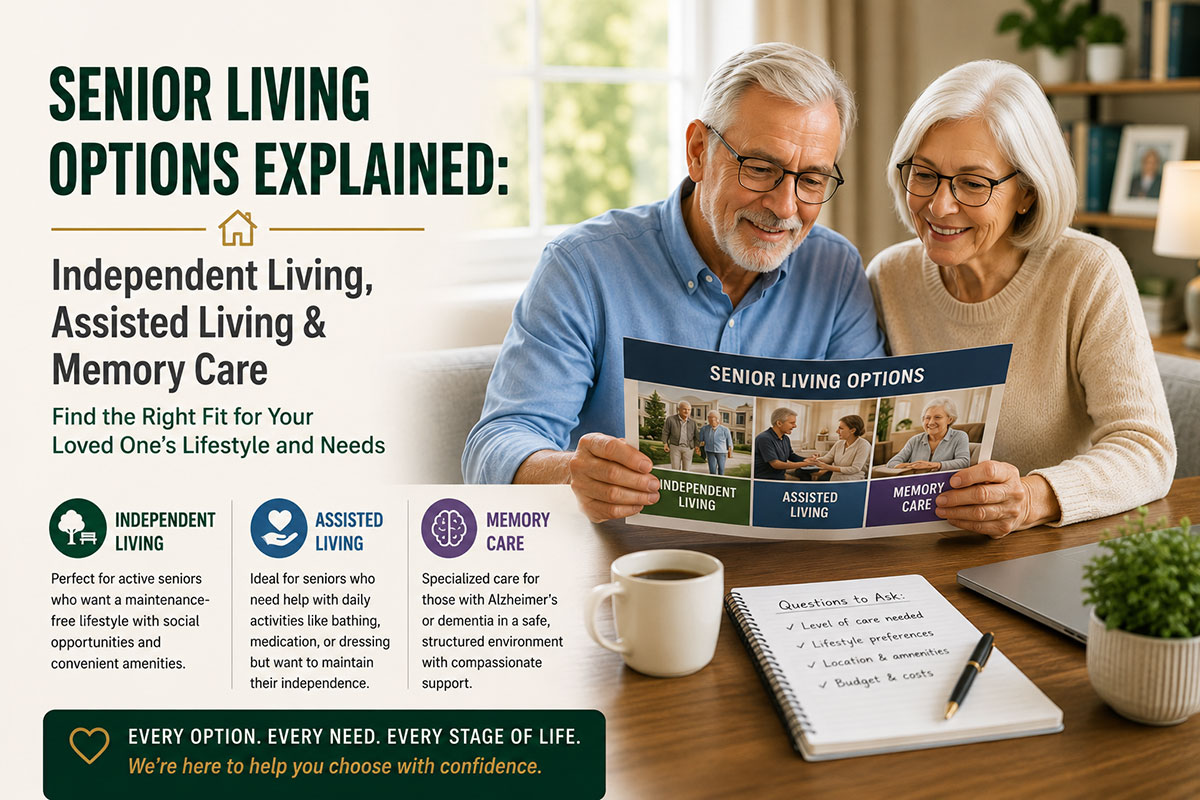
Why Choosing the Right Senior Living Option Matters More Than Most Families Realise
The decision about senior living is one of the most consequential choices a family will make — for the wellbeing of an aging parent, for the quality and sustainability of care, and for the financial resources that will fund it. Yet most families approach this decision with very little preparation, often under the pressure of a medical event or care crisis that forces a rapid choice.
Option 1: Independent Living — For Active, Self-Sufficient Seniors
Independent living communities are residential communities designed specifically for seniors — typically those 55 or older — who are fully capable of managing their own daily activities but choose to live among peers, with access to amenities, social programming, and the freedom from home ownership responsibilities.
Residents in independent living communities typically live in private apartments or cottages. What the community provides is infrastructure: maintained grounds and buildings, restaurant-style dining, fitness facilities, transportation, organised social activities, and a community of similarly-aged neighbours.
Option 2: Assisted Living — Support with the Activities of Daily Living
Assisted living communities provide residential care for seniors who need help with one or more activities of daily living (ADLs) — bathing, dressing, grooming, medication management, mobility assistance, or meal preparation. They are residential in character: private or semi-private apartments, communal dining, social activities, and a team of trained staff available around the clock.
Assisted living provides: 24/7 staff availability, help with personal care and ADLs, medication management and administration, three meals daily plus snacks, social and recreational programming, transportation, and housekeeping.
Option 3: Memory Care — Specialist Support for Alzheimer’s and Dementia
Memory care is a specialised form of residential care designed specifically for individuals living with Alzheimer’s disease, other forms of dementia, or significant cognitive impairment. Memory care communities are purpose-designed: secure environments to prevent wandering, staffed by professionals trained in dementia care, with programming specifically designed to support cognitive function and quality of life.
Option 4: Skilled Nursing Facilities
Skilled nursing facilities (SNFs), commonly called nursing homes, provide the highest level of residential care available outside of a hospital. They are staffed by licensed nurses around the clock and are equipped to provide complex medical management — wound care, IV therapy, post-surgical rehabilitation, ventilator management, and other clinical services.
Typical cost: $8,000–$12,000+ per month for a private room.
Option 5: In-Home Care — Staying in Your Own Home
In-home care allows seniors to remain in their own homes while receiving professional support for daily activities, personal care, and sometimes medical services. Home care ranges from companion care and homemaker services through personal care to skilled home health care.