
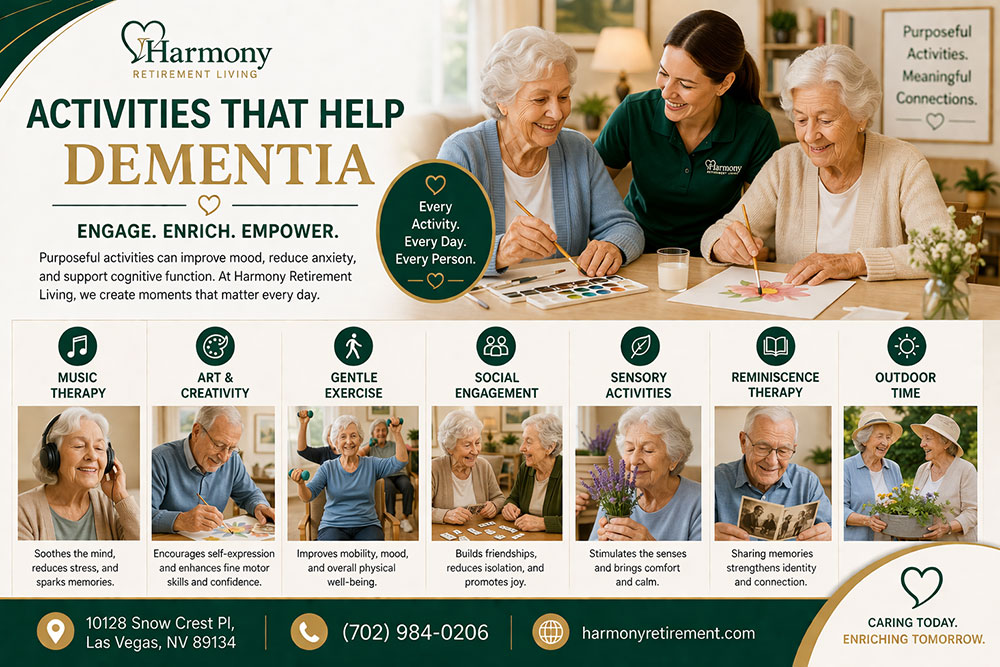
While there is currently no cure for Alzheimer’s disease or dementia,
research consistently shows that certain activities can slow cognitive
decline, improve quality of life, and reduce behavioral symptoms in
people living with memory disorders. At Harmony Retirement Living in
Las Vegas, these evidence-based activities are woven into our residents’
daily lives.
1. Music Therapy
Music is one of the most powerful tools in dementia care. The area of
the brain that processes music is often one of the last to be affected
by Alzheimer’s, which is why individuals who can no longer carry on a
conversation may still sing along to songs from their past. Research
published in the Journal of Alzheimer’s Disease has shown that music
therapy reduces agitation, improves mood, and can temporarily enhance
cognitive recall.
Practical tip for families: Create a playlist of music your loved one
enjoyed in their youth and play it during visits or challenging times
of day.
2. Physical Exercise
Regular physical activity increases blood flow to the brain, which
supports cognitive function and may slow the progression of dementia.
Even gentle forms of exercise — chair yoga, walking, stretching,
or light dancing — have been shown to improve balance, reduce fall
risk, improve sleep, and decrease anxiety and agitation in dementia patients.
Exercise does not need to be intense to be beneficial. Consistency
matters more than intensity. Even 20–30 minutes of gentle movement
per day can make a meaningful difference.
3. Reminiscence Activities
Reminiscence therapy involves discussing past experiences, events,
and memories using photographs, familiar objects, music, or video clips.
Because long-term memory is often preserved longer than short-term
memory in Alzheimer’s, these conversations can be deeply engaging
and emotionally rewarding for residents.
Reminiscence activities also give caregivers valuable insight into
each resident’s personal history, which helps them provide more
personalized, meaningful care.
4. Social Engagement
Isolation accelerates cognitive decline. Meaningful social interaction —
whether with family, fellow residents, or trained caregivers — is one
of the most important protective factors for brain health. Group activities,
shared meals, and one-on-one conversations all provide important social stimulation.
Family visits are especially meaningful. Even if your loved one doesn’t
always recognize you, your presence, touch, and voice are deeply comforting
and beneficial.
5. Art and Creative Expression
Painting, drawing, coloring, crafting, and other creative activities
engage multiple areas of the brain simultaneously. Research has shown
that art therapy reduces anxiety and depression in dementia patients,
improves fine motor skills, and provides a meaningful sense of accomplishment.
Creative activities do not require artistic skill. The process of creating —
not the finished product — provides the cognitive and emotional benefit.
Activity-Based Care at Harmony Retirement Living
At Harmony Retirement Living in Las Vegas, NV, our structured daily activity
program incorporates all of these evidence-based approaches. Every resident
participates in programming tailored to their abilities, interests, and
stage of dementia. Call us at (702) 984-0206 to learn more about our
activity programs and schedule a tour.