
The Guilt and the Love: Why This Is the Hardest Recognition
If you are reading this article, it is almost certainly because you love someone. Recognising that a parent’s needs have grown beyond what can be safely and sustainably managed at home is not abandonment. It is care — the kind that places their safety, their health, and their quality of life above sentiment and convenience.
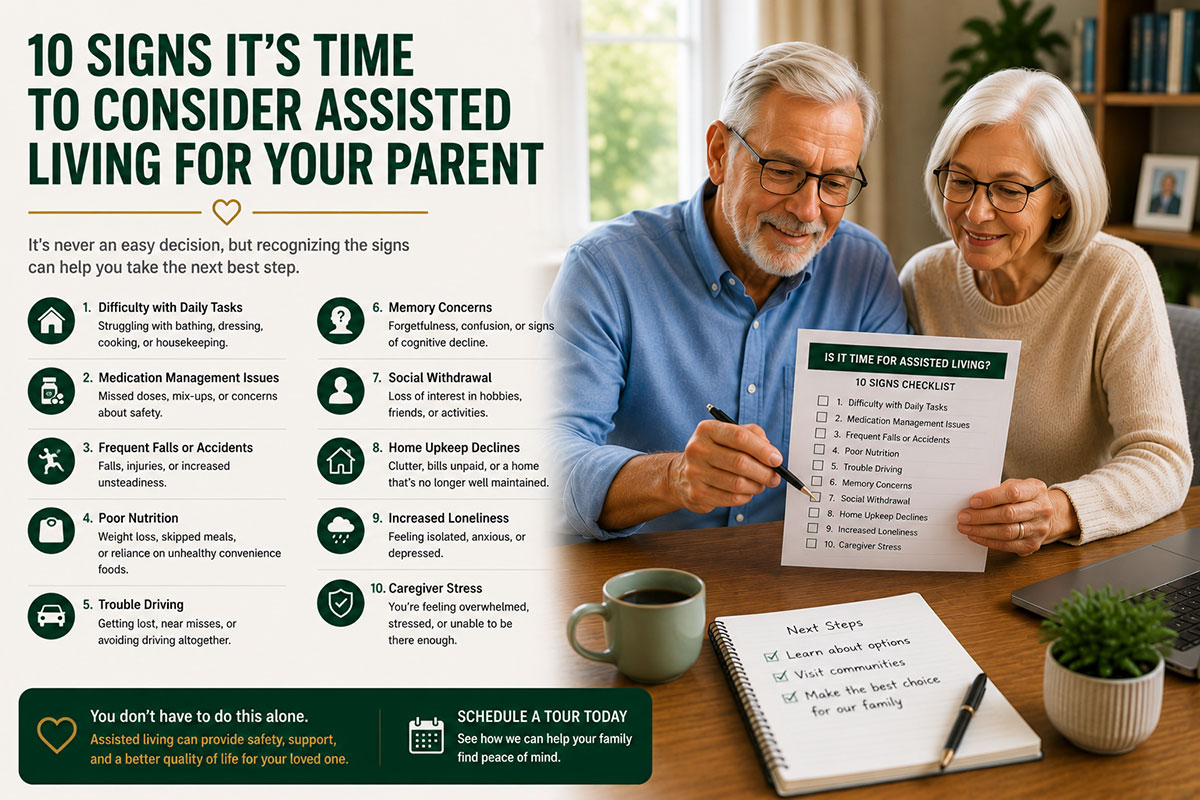
The 10 Signs: What to Look For
Sign 1: Declining Personal Hygiene and Grooming
One of the earliest and most telling signs is a decline in personal hygiene. The parent who was always impeccably dressed and groomed is now wearing the same clothes for days, has visibly unwashed hair, or shows signs of poor dental hygiene. This decline often results from a combination of physical limitations and cognitive changes.
Sign 2: Unexplained Weight Loss or Evidence of Poor Nutrition
Unintentional weight loss — losing 5–10% of body weight without trying — is a significant medical warning sign in older adults. When you visit, look in the refrigerator. Check expiry dates. Notice whether there is evidence of regular, nutritious cooking.
Sign 3: Frequent Falls or Significant Mobility Issues
Falls are the leading cause of injury-related death among adults 65 and older in the United States. A single significant fall changes the risk profile dramatically — not only because of the injury it may have caused, but because of the fear of falling that often follows.
Sign 4: Memory Lapses That Go Beyond Normal Aging
Forgetting recent events entirely, getting lost in familiar neighbourhoods, leaving the stove on, not recognising close family members, or repeating the same story or question within a single conversation are not normal aging. A formal assessment by a geriatric specialist or neurologist is the appropriate first step.
Sign 5: Social Isolation and Withdrawal
Loneliness among older adults is a public health crisis. Research consistently shows that social isolation is associated with significantly elevated risks of depression, dementia, cardiovascular disease, and premature death — with effects comparable in magnitude to smoking 15 cigarettes per day.
Signs 6–10: Completing the Picture
- Sign 6 — Medication Mismanagement: Missed doses, doubled doses, and confusion about medication schedules are dangerous and cause thousands of preventable hospitalisations annually.
- Sign 7 — Home Safety Issues: Cluttered pathways, inadequate lighting, bath areas without grab bars, and absence of emergency notification systems all pose real risk.
- Sign 8 — Caregiver Burnout: If you or another family member is the primary caregiver and you are exhausted, resentful, or neglecting your own health — this is a significant sign.
- Sign 9 — Recent Hospitalisation or Rapid Health Decline: A hospitalisation often reveals care needs that were previously hidden or managed precariously.
- Sign 10 — Your Parent is Expressing Fear or Loneliness: A parent who says ‘I don’t feel safe here’ or ‘I’m so lonely’ is telling you something important. Listen without immediately offering reassurance.
What to Do Next: A Step-by-Step Action Plan
- Have a physician assessment to establish a medical baseline.
- Research options before raising them with your parent. Visit Harmony Retirement’s website and schedule a private advisor call.
- Have the conversation gently and with patience. See our companion article ‘How to Talk to Your Parents About Moving to a Retirement Community.’
- Schedule a tour — together if possible, alone first if necessary. Seeing a vibrant, warm community removes more resistance than any conversation.